Following is the Introduction of the book – “The Power of Now” by Eckhart Tolle. I found it so amazing that I felt compelled to share it with everyone. It is the story of enlightenment of Eckhart Tolle, in his own words.
I have little use for the past and rarely think about it; however, I would briefly like to tell you how I came to be a spiritual teacher and how this book came into existence. Until my thirtieth year, I lived in a state of almost continuous anxiety interspersed with periods of suicidal depression. It feels now as if I am talking about some past lifetime or somebody else’s life.
One night not long after my twenty-ninth birthday, I woke up in the early hours with a feeling of absolute dread. I had woken up with such a feeling many times before, but this time it was more intense than it had ever been. The silence of the night, the vague outlines of the furniture in the dark room, the distant noise of a passing train – everything felt so alien, so hostile, and so utterly meaningless that it created in me a deep loathing of the world. The most loathsome thing of all, however, was my own existence. What was the point in continuing to live with this burden of misery? Why carry on with this continuous struggle? I could feel that a deep longing for annihilation, for nonexistence, was now becoming much stronger than the instinctive desire to continue to live.
“I cannot live with myself any longer.” This was the thought that kept repeating itself in my mind. Then suddenly I became aware of what a peculiar thought it was. `Am I one or two? If I cannot live with myself, there must be two of me: the `I’ and the `self’ that `I’ cannot live with.” “Maybe,” I thought, “only one of them is real.”
I was so stunned by this strange realization that my mind stopped. I was fully conscious, but there were no more thoughts. Then I felt drawn into what seemed like a vortex of energy. It was a slow movement at first and then accelerated. I was gripped by an intense fear, and my body started to shake. I heard the words “resist nothing,” as if spoken inside my chest. I could feel myself being sucked into a void. It felt as if the void was inside myself rather than outside. Suddenly, there was no more fear, and I let myself fall into that void. I have no recollection of what happened after that.
I was awakened by the chirping of a bird outside the window. I had never heard such a sound before. My eyes were still closed, and I saw the image of a precious diamond. Yes, if a diamond could make a sound, this is what it would be like. I opened my eyes. The first light of dawn was filtering through the curtains. Without any thought, I felt, I knew, that there is infinitely more to light than we realize. That soft luminosity filtering through the curtains was love itself. Tears came into my eyes. I got up and walked around the room. I recognized the room, and yet I knew that I had never truly seen it before. Everything was fresh and pristine, as if it had just come into existence. I picked up things, a pencil, an empty bottle, marveling at the beauty and aliveness of it all.
That day I walked around the city in utter amazement at the miracle of life on earth, as if I had just been born into this world.
For the next five months, I lived in a state of uninterrupted deep peace and bliss. After that, it diminished somewhat in intensity, or perhaps it just seemed to because it became my natural state. I could still function in the world, although I realized that nothing I ever did could possibly add anything to what I already had.
I knew, of course, that something profoundly significant had happened to me, but I didn’t understand it at all. It wasn’t until several years later, after I had read spiritual texts and spent time with spiritual teachers, that I realized that what everybody was looking for had already happened to me. I understood that the intense pressure of suffering that night must have forced my consciousness to withdraw from its identification with the unhappy and deeply fearful self, which is ultimately a fiction of the mind. This withdrawal must have been so complete that this false, suffering self immediately collapsed, just as if a plug had been pulled out of an inflatable toy. What was left then was my true nature as the ever-present I am: consciousness in its pure state prior to identification with form. Later I also learned to go into that inner timeless and deathless realm that I had originally perceived as a void and remain fully conscious. I dwelt in states of such indescribable bliss and sacredness that even the original experience I just described pales in comparison. A time came when, for a while, I was left with nothing on the physical plane. I had no relationships, no job, no home, no socially defined identity. I spent almost two years sitting on park benches in a state of the most intense joy.
But even the most beautiful experiences come and go. More fundamental, perhaps, than any experience is the undercurrent of peace that has never left me since then. Sometimes it is very strong, almost palpable, and others can feel it too. At other times, it is somewhere in the background, like a distant melody.
Later, people would occasionally come up to me and say: “I want what you have. Can you give it to me, or show me how to get it?” And I would say: “You have it already. You just can’t feel it because your mind is malting too much noise.” That answer later grew into the book that you are holding in your hands.
Before I knew it, I had an external identity again. I had become a spiritual teacher.
Following is the article written by Dr. Sandeep Pandey Ji (Social Activist, Guest Faculty at IIT(BHU)). Read more to know the context.
Some of my teacher friends are quite concerned with the fact that I don’t conduct any examination in the courses that I teach and almost all students in my class get ‘A’ grade. I believe there is no relationship between learning and examination. If the purpose of teaching is to make students understand a subject the job of a teacher is not complete until the students have learned the subject. Any failure of student to learn should be considered a failure of the teacher to make his/her students understand the subject.
I feel sorry that so much precious time is wasted in setting questions papers, conducting examinations, correcting answer sheets and giving grades. Some teachers seem to take the whole process of conducting examination more seriously than teaching the course itself. For some it is a very pious exercise which they see as integral part of teaching. They cannot imagine the process of teaching sans examination. But performance in examination is not a true reflection of student’s learning. Students may pass examination, and often with good marks, without understanding the subject by adopting legitimate as well as unfair means. This exercise of examination is akin to a struggle between the teacher and the taught. After an insipid semester of instructions the teacher tries to put the students to unnecessary strain of memorizing the content and is usually very strict with grading. So much so that some teachers consider it a matter of pride that students are not able to get very high marks in their subjects. Students on the other hand try to beat the teachers and find ways to score good marks without putting in much effort.
In my system of evaluation I conduct one-to-one interaction with each student in my class. The interaction is held in my office or the hostel room of student. With a class size of slightly over hundred students I’m able to do it about three times during the semester at IIT, BHU. In this evaluation I test the understanding of the student. If the student has not learned the subject he/she is asked to go back, study and prepare for another round of interaction. The students have unlimited chances to learn the subject. The process of evaluation is complete when the teacher and student are both satisfied with the learning achieved. In this process almost all students are able to achieve a certain basic level of understanding of the course. This is the reason that almost all students get the same grade in the class. Since everybody has understood the subject they get ‘A’. I don’t see why they should be given any lesser grade. Ideally I would be happy if no grades had to be given. I should just be required to declare whether the student has understood the subject or not.
Let me make it clear that I’m not saying the examinations have no role. I’m just saying they have no role in learning process. However, if some selection is to done, for example for a job, then the employer may use the method of examination to make appropriate selections. In our country there is a huge industry which just prepares people for various kinds of examinations. They are guilty of making the competition cut throat, draining any element of learning in the teaching process. The joy which is associated with the process of learning disappears as one is exposed to fierce competition. Moreover, it wastes the time and energy of so many youth who are ultimately not able to clear these examinations. The successful candidates are only a miniscule percentage of those who are not able to make it.
However, when we solve problems in real life we almost never do it under examination like conditions. In fact, instead of competing with our colleagues, we try to seek their cooperation in accomplishing a task. Hence the role of examination must not be exaggerated. It is an artificial meaningless wasteful exercise which puts tremendous strain on candidates.
The element of competition inbuilt in examination brings the worst out of us, distorting our personalities, making us more selfish and unnecessarily aggressive. People who are not subject to process of competition, for example all primary producers and illiterate service providers, are more humane in their interaction and produce better quality results in their work too. They have never scored high marks nor hold certificates and degrees from reputed institutions but the society trusts them to do its work. And they do their work honestly. If one thinks about it, it is amazing that we trust formally unqualified and untrained people to do such important tasks as cook our food, build our houses, handle our little children, etc., essentially because we believe in their integrity but still continue to accept the idea that competition produces quality. Most of the above mentioned categories of people are not working in competitive set ups.
People who do not go through the process of competition have a better understanding of life. For example, they know the amount of resources needed to fulfill human needs. The educated people because of their selfish nature become greedy and lose a sense of remaining contented within limited resources. Hence they feel that their needs are unlimited. This is the reason they also engages in corruption. Corruption is a product of educated society. The uneducated are victims of corruption.
Empathy is the basis of all the human connections. Empathy “happens” when other person is able to experience within himself the same emotional condition, which I am experiencing in a given situation, and then other person acknowledges and expresses to me, how it feels to be there. Other person also feels empathy with me, when I do the same. Empathy is the deepest level of emotional oneness which happens between two individuals. It is an amazing feeling of oneness, connectedness and love.
Sympathy on the other hand, which is mostly confused with empathy, is almost the opposite of empathy! Sympathy is trying to understand other person’s condition and then offering consolation or solutions, without having experienced that specific emotional condition within oneself. Sympathy doesn’t connect two individuals, to the depth, to which empathy connects.
Sympathy is a phenomena, when other person is not able to exactly understand how I feel, but evaluates/judges my situation in a certain way. Other person in this case may give a lot of space and time and may be very nice behaviorally, but his inability to connect with my emotional condition, leaves a void within me. I do not feel connected with the person. Sympathy is often accompanied with the feeling of superiority in the person sympathizing and pity for other person. Nobody likes to be pitied.
The person sympathizing may many a times feel that he understands how it feels to be there in a given situation, but in reality he may not. He may feel that he is empathizing, but in reality, he may be sympathizing. The right of decision, whether the person is sympathizing or empathizing, generally lies with the person on the receiving end. The receiver only can decide, what has happened – Sympathy or Empathy!
Empathy is deep, Sympathy is superficial. Empathy drives connection, Sympathy drives disconnection. Empathy gives comfort, Sympathy brings void. Empathy strengthens the bonding, Sympathy weakens it. Empathy makes a person attractive, Sympathy makes a person repulsive.
In all human conditions, Empathy breeds Trust, Empathy breeds Respect, Empathy breeds Affection and Empathy breeds Love! Without empathy, no amounts of money, no amounts of power, no amounts of nice behavior and hospitality can bring connection between two human beings. Empathy is the basis of all the human connections.
Capability doesn’t necessarily imply Actualization. All human beings are “Capable” of feeling Empathy, but capability doesn’t necessarily imply actualization. Empathy comes with experience and understanding. The more and diverse experiences I have, the more and diverse thought processes I am aware of, the more and diverse emotional states I am aware of or have experienced in past, the more I am vigilant and understanding of my own experiences, thoughts and emotions, the more I will be able to empathize with others. It takes a lot of experiences and inner-connectedness to feel empathy with other person. Introspection and inner-connectedness are necessary to have empathy, but they are not sufficient. Experience of diverse human conditions, understanding of diverse human emotions, understanding of diverse thought processes, are also essential to feel empathy. The more one explores in various human dimensions, the more empathetic one keeps becoming.
There are 4 Components of Empathy. Empathy requires four things to be done. They are:
1. Perspective Taking.
2. Staying out of Judgements.
3. Connecting and experiencing within oneself what other person is going through.
4. Expressing how it feels to be there.
Perspective taking is the process of seeing the situation from the reference point of other person. Staying out of judgements is essential, if one wishes to feel empathy. In fact, empathy kills judgements. If one is really able to feel empathy with other person, the judgements will automatically go away! Empathy requires connecting within myself to the same emotional condition, which other person is going through. And, finally expressing to other person what it feels like to be in that situation, is essential to bring comfort. In fact, in case of empathy, it happens automatically. In empathy, all the 4 things above happen automatically.
Empathy enriches one’s perspective. Empathy develops the capability in a person to see the same situation from multiple perspectives. In fact the reverse is also true. The more perspectives one is able to see the same situation from, the more empathetic one keeps becoming. Lack of understanding of subjectivity of human condition, is one of the main reasons for lack of empathy.
Empathy kills Judgements. To feel empathy, one has to go beyond one’s notions of “good” and “bad”. Different thoughts and emotions which human beings experience in their daily life, are not bound with the ideas of “good” and “bad”. Any type of thoughts and emotions may come in a human being. If one is too immersed in one’s notions of good and bad, if one’s perception is too colored with the ideas of ‘this is good’ and ‘that is bad’, if one is too judgmental, then one will not be able to feel empathy and others will not feel comfortable with that person.
Empathy Builds Relationships: Connecting, Experiencing and Expressing. Empathy Builds Acceptance. Acceptance and Emotional comfort are the keys to good relationships. Empathy breeds acceptance and emotional comfort. When other person is able to connect with my emotional condition, experiences the same within himself and expresses how it feels to be there, it brings me a lot of emotional comfort. Other person also feels comfortable with me, when I do the same. When I am able to connect with other person at this emotional level, then it also builds acceptance. Acceptance is one of the foundational building blocks of any relationship.
Empathy increases understanding of Human Nature. The more one is able to empathize, the more one is able to understand and appreciate different human conditions and perspectives, the more one is able to understand different thought processes, the more one is able to understand different emotional conditions, the more one grows one’s understanding of human nature. One is able to see that innate nature of a human being is good. One is able to see that human being is innately good, but is unable to actualize the goodness, due to certain limitations. An empathetic person is able to understand and appreciate even those limitations. He is not judgmental about the limitations. An empathetic person understands and even respects the imperfection of human beings in their current state of being, since he is or he has been through that imperfection himself and he understands how it feels to be there.
With the increased understanding of human nature, when an empathetic person comes in contact with a human being, he is not able to empathize with, because of the limitation of his experiences, he is still compassionate with him. Compassion builds with more empathy. Compassion is the “Trust in Innate Goodness” of a human being. The more one is able to empathize, the more Trust one builds in Innate Goodness of a human being, the more compassion one builds within oneself for human beings in general.
Empathy in the beginning is generally limited by one’s own experiences in life and awareness within oneself. It is also not possible to have all the experiences of all the kinds in life, but the more one builds empathy and awareness within oneself, the more one breaks free from the limitations of experiences, and the more one develops compassion for human beings in general.
Empathetic Guidance is well received by everyone. Guidance, specially in life related matters, is a thing which one is not receptive to, when given without empathy. Knowledge cannot be imposed on anybody. I am ready to listen to other person when I trust other person’s knowledge, I find his knowledge good for me, I trust other person as a human being and when I feel empathy from other person. When empathy in other person is absent, I am not receptive to him, even if he is saying something really useful. Knowledge, when served in the plate of Empathy, is well taken by everyone. Empathy makes other person more receptive. It loosens his rigidity and preconceived notions.
Empathy is a solution to internal peace, good relationships and societal harmony. When I am able to empathize with other person, when I am able understand other person’s situation better, when I understand why other person did/does what he did/does, then it increases my acceptance for other person. When my acceptance for other person increases, I feel more peaceful and comfortable within. Non-Acceptance brings internal disturbance. Acceptance bring peace within. The more my acceptance increases for other person, the more other person also feels comfortable with me and that leads to mutual fulfillment and complementarity in relationships. When people in a society become more empathetic, more accepting and their relationships improve with each other, it contributes a lot to the harmony in society.
Following resources summarize Empathy very very well. Please spend some time watching them.
1. Following short video by Dr. Brene Brown summarizes Empathy quite well!
The development of a country is usually defined in terms of only its economic progress. The more a country
economically progress the more it grows. Economic progress is measured in terms of its Gross Domestic Product. GDP is calculated in terms of the monetary value of all legal transactions involved in the primary, secondary and tertiary sectors of economy. More the goods and services are produced and consumed, more the GDP rises and more the country progresses. Most countries in the world and international financial institutions use GDP as a yardstick to measure progress. So much so that some modern economic experts are obsessed with merely maintaining high rates of GDP. Fall in GDP rates brings gloom to economies.
However, from time to time questions have been raised about the GDP being a true measure of progress. Does it capture the overall growth in a holistic sense? Does it hide more than it reveals? Does it have some adverse affects? If GDP is not a true reflection of progress, what is? Let us consider some of these questions.
GDP doesn’t reveal the actual wealth distribution. It is not uncommon for the GDP of a country to increase simultaneously with increase in gap between the rich and the poor. It implies that the wealth being generated is concentrated in the hands of a minority rich section of society rather than being equitably distributed. Economic inequality does not lead to a healthy society as it results in a plethora of social problems. These include crime, violence, physical and mental illness, unsatisfied aspirations of youth, disintegration of community life, trust deficit within and among families, drug and alcohol abuse, social segregation, more members of marginalized sections of society landing in jail, lower literacy levels and health status of society, homelessness, suicides, to name a few. Thus what we get is an encumbered growth.
Let us consider the following examples which expose the flawed nature of GDP. Forests if allowed to flourish on
their own do not contribute to growth but if trees are cut down and wood sold in the market then this activity contributes to GDP. If people are healthy they do not contribute to GDP. But if they fall ill frequently, have to consult doctors, undergo tests and consume medicines they contribute to GDP. If people are hale and hearty they do not contribute to GDP. But if they have to visit psychologists, psychiatrists or counselors, they contribute to GDP. If water sources are clean, they do not contribute to growth, but if they become polluted with industrial waste, chemicals used in agricultural fields and sewerage, their cleaning constitutes an economic activity. The bottled water industry stands to gain directly from polluted water sources. If society is crime free then it doesn’t contribute to GDP. However, if we hire security personnel and buy expensive equipments, arms and ammunition, it contributes to GDP. At global level if there is peace between nations, it doesn’t contribute to GDP. If there are wars and dangerous weapons are used it may boost some economies. There is money to be made even in post war reconstruction work, contracts for which are decided even before the war begins. If people exchange gifts and services as part of barter system, it doesn’t contribute to growth but if the same things and bought and sold, they begin contributing to economy. If people live in joint family system as part of which they share resources then they don’t contribute to GDP. But if there are disputes within family, lawyers have to be hired to contest legal cases, money is spent to divide property and to build boundary walls, nuclear families buy more items from the market, it is good for economy. If the production and consumption is local it is not good for larger economy. But if long distance transportation of goods is involved, packaging and middle men are involved then it contributes significantly to economy. If women take care of domestic chores it doesn’t contribute to economy but if men go out and cook food in a restaurant or a lady baby sits for payment then there is a contribution to GDP. If one helps another human being as a volunteer out of a sense of service, which gives inner satisfaction, it doesn’t contribute to economy. But if the same job is done by a professional, it contributes to GDP. If one believes in the omnipresent notion of God and worships from home it doesn’t contribute to economy. But if one goes on pilgrimage to visit a special place where God resides, it contributes to GDP. If one pays attention to words of wisdom from elders in family and community it doesn’t contribute to GDP, but if one goes to listen to one of the commercial preachers, some of them in the garb of sages, it contributes to economy.
Quite clearly GDP is a very inadequate criterion of growth. It doesn’t capture quality of human relationships, psychological and physical well being of human beings, sustainable relationship with nature, sense of security or even the fulfillment of basic material needs of all human beings.
The idea that ‘product’ can make human beings progress will have to give in to a more holistic notion of growth
where ‘happiness’ of human beings becomes the key criterion. Some countries like Bhutan are already measuring the progress of their society on the basis of a Gross National Happiness index.
By Devansh Mittal and Sandeep Pandey
e-mail: devansh.exe@googlemail.com and ashaashram@yahoo.com
(About the writers: Devansh Mittal is a Lecturer and Ph.D. student at IIIT, Hyderabad and Sandeep Pandey is a Visiting Faculty at IIT, BHU, Varanasi)
I gave this lecture on Education at Theosophical Society, Varanasi. Submitted the lecture in written form, which is published in their journal.
I am a Lecturer and a PhD student at IIIT-Hyderabad, currently staying at IIT (BHU). My PhD problem includes psychological and sociological studies. Just a few years ago, I myself did not know that I will be doing higher studies and that also in humanities! I had joined B.Tech program at IIIT-Hyderabad (International Institute of Information Technology, Hyderabad) in 2003, in computer science department. I had not chosen my stream; I had got this stream because I had a good rank in AIEEE (All India Engineering Entrance Examination). I had a notion that those who get good ranks get computer science. I was neither interested nor disinterested in computer science or any other stream as such. For me studies were just a means to get a good job and good livelihood and I believed that getting a good job and good livelihood was all that was needed in the life! I had normal ambitions, which any normal student joining a good technical institution might have, like complete the graduation, get a good job, work in the industry for few years, do MBA, get married, take loans, buy a house and spend rest of the life in repaying the loans! For all these aspirations IIIT-Hyderabad seemed to me a perfect institute, given my rank in AIEEE. I had joined IIIT Hyderabad because the placements and faculty in the institute were/are good, so it was a suitable institute to fetch me Good Job, Good Package and Good Respect.
I have been one of the beneficiaries of this system. I got what I desired from my undergraduate college – Good Job, Good Package and Good Respect. After my B.Tech, I worked in IT industry for two years, earned a lot of money, visited abroad, and experienced the entire “Hell of Affluence”, which most of the students who join colleges, desire for. The reason, I called my life of affluence, a hell, is because it lacked on the very basic thing I needed in my life. In fact, it lacked on the very purpose, I needed this affluence. It lacked Happiness. It lacked peace, fulfillment and joy! My life had become 2/7, which means, in a week, I used to enjoy only two days – Saturday and Sunday, because they used to be holidays! I used to feel, I am living to earn money and not earning money to live. “Life” itself was missing in my life. Amazing thing is, this is not only my personal story, but the story of almost every child who is aspiring to be “Successful” in the current system! Frustration kept growing in me, during those two years in which I worked in IT industry.
Things have definitely changed for me now in past few years, after I decided to quit IT industry and join PhD, not in Computer Science, but in Humanities. I assume that this change is for better. Since this is not a document to share my personal journey, so I will not dwell further into it, but I thought of sharing a small personal account, not primarily to share my personal journey, but to show the condition of society we are living in, which constructed our pasts, influencing our present and also shaping our future, without our knowledge!
Everything in current society is being driven by the Market. Market drives the societies, the economies, the polities, our education systems, our production and health care systems, our relations, our goals and aspirations and even our psychology! We are being used as the Cogs in the entire machine-like system, for the sake of its own development. The major question here is, people are for development of the system or system is for the development of the people?
We, as a human race, have gone completely wrong in understanding the true meaning of word “Development”. What is Development in current system? Replace the mud-brick houses with concrete. Replace the extended family compounds with nuclear family apartments. Replace systems of mutual aid with insurance. Replace communally held land with deeded property. Replace culinary knowledge with fast food restaurants. Replace the identity conferred by local stories and relationships with identity derived from brands. Replace walking with automobiles. Replace traditional songs with entertainment products. Replace sustainable subsistence agriculture with commodity export cash crops. Replace experiential land-based learning with school-based curricula. Replace the village healer with a medical clinic. Send all the young people to the cities. Prepare city people to go to Abroad. Replace small scale industries with big industries. Covert everything into Free Market. Open economy of all the countries. Replace Self Employment with More Industrial Jobs. Convert Natural Resources in Products. Let the industry determine the education, production, justice, health care and even the psychology of people. Let the industry govern the government. If we are doing all this, then that is called development, in current system!
Today, we see two major problems, with which entire world is struggling – global warming and wars! Rest of the nature i.e. plants, animals, airs, waters and lands have not gives us these problems. These problems are the consequences of unsustainable human activity. Both of these problems are in a way consequence of our current fallacious understanding of the word “Development”.
All said so far, begs us strongly, to answer the question, what is then “Development”?
I believe, to understand the root of the word “development” and to understand its real meaning, we will need to understand a “human being’s natural desires” and how “development” happens in rest of the nature. Development in rest of the nature is generally referred to as “Evolution”.
There is evolution in nature. Evolution is something which is accepted in science as well. The evolution which we see in nature progresses from Material Order to Plant Order to Animal Order and then finally comes the Human Order. This seems like a natural and logical flow of evolution. The question which comes here is, what is the basic difference between Human Beings and rest of the species in nature? or more specifically, what is the difference between human beings and animals?
If we try to explore the above questions in depth then we find that there are several differences between animals and humans. Some of these differences are as follows:
Evolution in human beings happens in relation to Evolution in their Consciousness.
Human beings have the capability to reflect over things. The object of reflection may be internal and/or external. Animals do not have neither the capability nor the necessity to reflect over things. The beliefs of animals towards themselves and towards rest of the nature seem hard-wired by the natural laws. On the other hand “Beliefs” of human beings towards themselves and towards rest of the nature, are not hardwired by the laws of nature. Human beings can become “Aware” of their beliefs. They have capability to question and alter their beliefs. Animals do not have the faculty of “Self Awareness” and thus they also do not have the capability to question and alter their beliefs.
Human beings have Free Will. Animals do not have free will.
Human beings have the capability to “consciously interfere” into their own process of evolution and the evolution process in rest of the nature. This interference may be negative or positive. If this is negative then we see all the problems which are currently manifested in the world. If it is positive, then there is possibility of creating the harmonious world, we desire. Capability to interfere into evolutionary process is also the definition and manifestation of free will in human beings.
In case of animals and other orders in nature, the evolution happens by the law of Natural Selection. As per the process of natural selection the evolution in animals and other species in nature, happens by natural laws and they cannot “consciously interfere” in their own or rest of the nature’s process of evolution. As per this, there is no free will in case of animals.
Living of an animal is mostly limited to four aspects: hunger, sleep, fear and reproduction. Needs of a human being transcend these four aspects. A human being needs something more than just the satisfaction of food, sleep, reproduction and saving themselves from bodily fears.
We need not teach an animal, what to eat, when to eat, how much to eat, when to sleep, when to wake up, how to sleep, when to reproduce, how to reproduce, how much to reproduce, how to do parenting, how to treat other animals of the same breed, how to treat other animals of different breed etc. Animals do not have insecurity of future, they do not carry agonies of past, and they live in present. Animals do not have any religion, they do not have communal wars, and they do not practice spirituality.
On the other hand, a human being needs to be taught, what to eat, how to eat, how to sleep, how to behave, how to have a peaceful mind, peaceful relations, peaceful society and peaceful co-existence with rest of the nature!
So we see that human beings have several different and higher needs, than animals. What are these higher needs of human beings?
Again on deeper self reflection we can find out that a human being needs following things:
Knowledge.
Happiness.
Material Prosperity.
Assuring and Fulfilling Relationships.
Fearlessness in Society.
Co-existence with rest of the nature.
Continuity of above all!
These are the needs in a human being, which when start to get fulfilled, makes a homosapien, a human. These are the higher needs in a human being. These are the needs which when fulfilled, give happiness to an individual, build mutual trust in relationships, secure fearlessness in society and ensure peaceful co-existence with rest of the nature. If we are moving towards fulfillment of these needs, we say that we are developing, otherwise, we say that we are moving away from development, in the real sense of the term.
Word “Development” can have no meaning, unless we define, where we wish to go as a whole. Without defining the goal of human beings, human relations and human society, we cannot define whether we are developing or not.
With the discussion till now, the understanding of human goals turn out to be something like following:
On the other hand, current notions of development and current goals of society include following:
The main thing to notice here is, realization of human goal is not possible, without Right Understanding and Right Feelings in Human Beings. This is where Education comes into picture.
The purpose of education as I understand, is to build understanding and capability in an individual, to realize and actualize the human goal, as discussed above. All the education has some “hidden purpose” which it tries to fulfill. There is no education without purpose, this is why we first discussed the purpose which we wish to fulfill through education.
If we see in history, Britishers in their education system, which they employed in India, had the purpose to build a race of Babus and Clerks, who can fulfill their purposes, and we know what their purpose was. At least we can say that their purpose was not same as what we discussed above.
Summarizing what we discussed till now, we can say that the purpose of education is to help an individual realizing and actualizing the goal, which he naturally desires. What a human being naturally desires? We discussed with the help of animal-human comparison, a human being naturally desires – Knowledge, Happiness, Prosperity, Fulfilling Relationships, Fearlessness in Society, Mutually Enriching Co-Existence with Rest of the Nature, and Continuity of All of the these things. On the basis of these natural human desires, we can say that the goal of entire human civilization logically concludes to be something like – “Happiness, Right Understanding and Right Feelings” at the level of Individuals, “Fulfilling Relationships and Prosperity” at the level of Family, “Fearlessness” at the level of Society, and Co-Existence with rest of the nature. We also saw what is happening in the current world and how that is quite contrary to what we naturally desire.
Moving ahead with the purpose of education, the two questions which arise associated with any kind of education system, are:
What should be the Content of education?
What should be the Process of education?
Content of Education
Content of education should be same as the content of knowledge a human being naturally desires.
So what a human being needs as a content of knowledge?
A human being wants to understand all the laws and details, at all the levels of his living.
Next question which comes here is at what all levels a human being lives?
A human being lives at following levels:
With the Self.
Within Relationships. In a family.
In a Society and with various Social Systems.
With rest of the Nature and Existence.
A human being lives at these four levels. A human being wants to understand all the laws and details at these four levels. Hence, the content of knowledge thus turns out to be following.
Content of Knowledge
Knowledge of the Self. What is the purpose of my life? And How do I fulfill it?
Knowledge of Relationships. What are the basic feelings involves in relationships? And how do I ensure them within myself and for others?
Knowledge of Society. What is a society? What constitutes a society? What should be the purpose of society? What are the various social systems required in the society? What should be the purpose of all those systems? And many more questions.
Knowledge of Nature. Knowledge of four orders in nature and their interconnectedness.
Knowledge of Rest of the Existence.
Next question is about process of knowledge. Following section highlights some salient features which should be incorporated in process of imparting knowledge.
Process of Knowledge
Process of imparting education should be such that it facilitates the understanding of the content of education to a human being in a way that it is easy for the person to understand. It becomes necessary to understand at this how a human being can understand better. Following are some features of process of education which when are incorporated in education help facilitate the understanding in students, in a better way.
Learning by Observation.
Learning by Experimentation and Doing.
Going from Meaning to Word.
Connecting with reality and environment around.
Going from Known to Unknown. Starting the content of teaching from what students know and then taking them towards the concept which they do not know.
Considering the Receptivity (Patrata) of the student.
Making a distinction between Value and Skill.
Understanding should be given more priority over theories and authors.
Making a distinction between Experimental and Experiential education and incorporating associated process.
Localization of Education. It means education should be in alignment with local conditions, local belief systems, local needs, local economy etc. When this is not the case then students begin to assume something else “non-local” as more superior than theirs. This affects local life, local relations, local communications, local systems.
Trust between Teacher and Student. Trust is must essential especially in experiential education.
Inquisitiveness to learn in both Teacher and the Student.
Education should not be the means to achieve some other end. It should be an end in itself.
Osho says – Every child is born with an innate search for truth. It is not something learned or adopted later on in life. Truth simply means, “I am, but I do not know who I am.” And the question is natural — “I must know the reality of my being.” It is not a curiosity.
These are the three differences, or three categories the world can be divided into: there are things which are, but they do not know that they are; hence there is no opening for any enquiry. They are closed, their existence is windowless. Then there are animals who know that they are, but they don’t have the intelligence to enquire what it is that they are. Their windows are open, but their intelligence is not enough to look out and see the stars and the sky and the birds and the trees. Their windows — whether opened or closed — don’t make much difference.
Perhaps once in a while a rare animal uses the window. In Shri Raman Maharshi’s ashram… and he was one of the most significant people of this century. Raman Maharshi was a silent pool of energy. Every morning he used to sit for a silent satsang, communion. He never talked much, unless asked something. Then too his answer was very short — having profundity, but you had to look for it. There was no explanation in it. His literature is confined to two, three small booklets.
His teaching was mostly to be in silent communion with the disciples. Naturally, very few people were benefited by him. But every morning he was sitting, people were sitting, and a cow would come and stand outside, putting her neck through the window, and she would remain standing there while the satsang lasted. It must have continued for years. People came and went, new people came, but the cow remained constant… and at the exact time, never late. And as the satsang would disperse she would move away.
One day she did not appear, and Shri Raman said, “Today satsang cannot be held, because my real audience is absent. I am afraid either the cow is very sick or she has died, and I have to go and look for her.” He lived on a mountain in the south of India, Arunachal. The cow belonged to a poor woodcutter who lived near the ashram. Raman left the temple where they used to meet, went to the woodcutter and asked, “What happened? The cow has not come today for satsang.”
The woodcutter said, “She is very sick and I am afraid she is dying, but she goes on looking out of the door, as if she is waiting for someone. Perhaps she is waiting for you, to see you for the last time. Perhaps that is why she is hanging around a little longer.”
Raman went in and there were tears in the eyes of the cow. And she died happily, putting her head in the lap of Raman Maharshi. This happened just in this century, and Raman declared her enlightened, and told his people that a beautiful memorial should be made for her.
It is very rare for human beings to be enlightened; it is almost impossibly rare for animals to become enlightened, but the cow attained. She will not be born again. From the body of a cow she has bypassed the whole world of humanity, and she has jumped ahead and joined with the buddhas. So once in a while — there are a few instances only — it has happened. But that cannot be called the rule; it is just the exception.
Things are, but they do not know that they are. Animals are, they know that they are, but they don’t have the intelligence to ask who they are. And it is not something to be wondered about. Millions of human beings never ask the question — that is the third category.
Man is, is aware that he is, and is capable by birth to enquire who he is. So it is not a question of learning, cultivation, education; you bring the quest with yourself. You are the quest. Your society destroys you. It has very sophisticated ways and means to destroy your quest, to remove the question from your being, or at least cover it up. And the method it uses is this: before the child has even asked who he is, the answer is given. And any answer that has been given before the question has been asked is futile; it is going to be just a burden.
He is told that he is a soul, that he is a spirit, that he is not a body, that he is not material. Or, in communist countries he is told that he is a body, just material, and that only in the old days, out of fear and ignorance, did people believe that they have souls — that that is just a superstition. But in both cases, the child is being given an answer for which he has not asked. And his mind is delicate, pure… and he trusts his mother, his father — there is no reason for him not to trust.
He starts a journey of belief, and belief kills the quest. He becomes more and more knowledgeable. Then education is there, religious education is there, and there is no end to collecting knowledge. But all this knowledge is futile — not only futile, but poisonous, because the first step has gone wrong. The question was not asked, and the answer has been implanted in his mind, and since then he has been collecting more and more answers. He has completely forgotten that any answer that is not the finding of a question is meaningless.
So the only quality of a seeker of truth is that he does not believe, that he is not a believer, that he is ready to be ignorant rather than to be knowledgeable, because ignorance is at least natural, simple, innocent. And out of ignorance there is a possibility, almost a certainty, that the question will arise, that the journey will begin. But through knowledge you are lost in a jungle of words, theories, doctrines, dogmas. And there are so many, and they are so contradictory to each other, that soon you will find yourself more and more confused… more and more knowledgeable and more and more confused.
As far as I am concerned the basic quality of a seeker of truth is to cut himself away from all belief systems, from all borrowed knowledge — in other words, to have the courage to be ignorant rather than to have borrowed knowledge. Ignorance has a beauty; it is at least yours, authentic, sincere. It has come with you. It is your blood, it is your bones, it is your marrow.
Knowledgeability is ugly, absolute rubbish. It has been poured upon you by others, and you are carrying the load of it. And the load is such that it will not give you any opportunity to enquire on your own what truth is. Your collection of knowledge will answer immediately that this is truth. If you are filled with THE HOLY BIBLE, then the question will be answered by THE HOLY BIBLE. If you are filled with the VEDAS, then the question will come out of the VEDAS. But it will come from some source outside yourself; it will not be your discovery. And that which is not your discovery is not yours.
Truth brings freedom because it is your discovery. It makes you fully into man; otherwise you remain on the level of the animals: you are but you don’t know who you are. The search for truth is really the search for the reality of your being.
Once you have entered your being, you have entered into the being of the whole, because we are different on the periphery but at the center we meet — we are one. You can draw many lines from the periphery of a circle towards the center; those lines on the periphery have a certain distance from each other. But as they come closer to the center the distance goes on becoming less. And when they reach to the center the distance disappears.
At the center we are one. At the periphery of existence we appear to be separate. And to know the truth of your being is to know the truth of the whole. There is just one quality, one courage: not to be afraid of being ignorant. On that point there can be no compromise, no cheap borrowed knowledge to decorate yourself with as a wise man. That’s enough! Just be pure and natural, and out of that purity, naturalness, ignorance, innocence, the quest is bound to be born.
Every human being would be a seeker of truth if the society were not interfering with children. The class of children is the most harmed, oppressed, exploited, distorted class of all classes — and the most helpless. And you are taking advantage of the helplessness of small children. But you are also not responsible. The same has been done to you. It is difficult to find out who was responsible in the beginning. But as long as we can look back, this has been the situation: every generation corrupts the new generation, and anybody who wants to prevent this corruption is condemned as corrupting the youth.
Socrates was condemned for corrupting the youth, and all that he was doing was the simple process of removing borrowed knowledge and helping his disciples to be themselves and then “to know thyself.” If anybody has served truth the most sincerely it was Socrates. But he was condemned by the court, by the law, by the people who were in power, for corruption, for corrupting young minds.
Strangely, in the land of Socrates I was also condemned as corrupting people’s minds. It seems the technology of corrupting the youth has evolved immensely in two thousand years, because it took Socrates his whole life to corrupt, and I was only there for two weeks! And the archbishop was already threatening to burn my house, to stone me to death.
Why are they afraid? They know perfectly well that they have no foundations. So if anybody shows the young people that their knowledge is unfounded, that all their answers are bogus because they don’t even have questions, that they are only repeating things parrot-like but they don’t have any understanding of what they are saying… then anybody who has a little intelligence will be able to understand it immediately. Is this corruption of the youth?
To bring people to the quest of the truth — is this corruption?
It seems it is the greatest crime in the world in which — unfortunately — we are living.
When you look at this page, there is a whir of processing: photons strike your retina, electrical signals are passed up your optic nerve and between different areas of your brain, and eventually you might respond with a smile, a perplexed frown or a remark. But there is also a subjective aspect. When you look at the page, you are conscious of it, directly experiencing the images and words as part of your private, mental life. You have vivid impressions of colored flowers and vibrant sky. At the same time, you may be feeling some emotions and forming some thoughts. Together such experiences make up consciousness: the subjective, inner life of the mind.
The Hard Problem
Researchers use the word “consciousness” in many different ways. To clarify the issues, we first have to separate the problems that are often clustered together under the name. For this purpose, I find it useful to distinguish between the “easy problems” and the “hard problem” of consciousness. The easy problems are by no means trivial – they are actually as challenging as most in psychology and biology – but it is with the hard problem that the central mystery lies.
The easy problems of consciousness include the following: How can a human subject discriminate sensory stimuli and react to them appropriately? How does the brain integrate information from many different sources and use this information to control behavior? How is it that subjects can verbalize their internal states? Although all these questions are associated with consciousness, they all concern the objective mechanisms of the cognitive system. Consequently, we have every reason to expect that continued work in cognitive psychology and neuroscience will answer them.
The hard problem, in contrast, is the question of how physical processes in the brain give rise to subjective experience. This puzzle involves the inner aspect of thought and perception: the way things feel for the subject. When we see, for example, we experience visual sensations, such as that of vivid blue. Or think of the ineffable sound of a distant oboe, the agony of an intense pain, the sparkle of happiness or the meditative quality of a moment lost in thought. All are part of what I am calling consciousness. It is these phenomena that pose the real mystery of the mind.
Knowledge Argument
To illustrate the distinction, consider a thought experiment called “The Knowledge Argument” devised by the Australian philosopher Frank Jackson.
According to the knowledge argument, there are facts about consciousness that are not deducible from physical facts. Someone could know all the physical facts, be a perfect reasoner, and still be unable to know all the facts about consciousness on that basis.
Frank Jackson’s canonical version of the argument provides a vivid illustration. On this version, Mary is a neuroscientist who knows everything there is to know about the physical processes relevant to color vision. But Mary has been brought up in a black-and-white room (on an alter-native version, she is colorblind) and has never experienced red. Despite all her knowledge, it seems that there is something very important about color vision that Mary does not know: she does not know what it is like to see red. Even complete physical knowledge and unrestricted powers of deduction do not enable her to know this. Later, if she comes to experience red for the first time, she will learn a new fact of which she was previously ignorant: she will learn what it is like to see red.
Let me try to explain the argument again in different words.
Suppose that Mary, a neuroscientist in the 23rd century, is the world’s leading expert on the brain processes responsible for color vision. But Mary has lived her whole life in a black-and-white room and has never seen any other colors. She knows everything there is to know about physical processes in the brain – its biology, structure and function. This understanding enables her to grasp everything there is to know about the easy problems: how the brain discriminates stimuli, integrates information and produces verbal reports. From her knowledge of color vision, she knows the way color names correspond with wavelengths on the light spectrum. But there is still something crucial about color vision that Mary does not know: what it is like to experience a color such as red. It follows that there are facts about conscious experience that cannot be deduced from physical facts about the functioning of the brain.
Jackson’s version of the argument can be put as follows (here the premises concern Mary’s knowledge when she has not yet experienced red):
(1) Mary knows all the physical facts.
(2) Mary does not know all the fact
———————————————-
(3) The physical facts do not exhaust all the facts.
There are following very important implications of “Knowledge Argument”:
Human Subjective Experiences as Phenomena are Not some illusionary phenomena. They are as real as anything else.
Human Subjective Experiences “In Principle” cannot be captured in the Structural, Functional, Procedural, Material Information, even if the information is in the highest possible detail.
Human Subjective Experiences “In Principle” can NOT be reduced in the Structural, Functional, Procedural, Material Information, even if the information is in the highest possible detail. This also implies that all the reductionist explanations of Consciousness are False!
One can put the knowledge argument more generally:
(1) There are truths about consciousness that are not deducible from physical truths.
(2) If there are truths about consciousness that are not deducible from physical truths, then materialism is false.
—————————————————
(3) Materialism is false.
Indeed, nobody knows why these physical processes are accompanied by conscious experience at all. Why is it that when our brains process light of a certain wavelength, we have an experience of deep purple? Why do we have any experience at all? Could not an unconscious automaton have performed the same tasks just as well? These are questions that we would like a theory of consciousness to answer.
One should definitely watch following TED Talk by David Chalmers in order to understand the Hard Problem of Consciousness.
And in order to research further on the topic, following resource by David J Chalmers is a MUST Read. It shows various issues in Mind Problem and concludes how “Hard Problem of Consciousness” is still unsolved and points towards the possibility that probably “Consciousness” may be an ontologically distinct entity.
To build a human like machine has always been the aim of Artificial Intelligence, to which it has partially succeeded and claims that more perfection will be achieved in future. It is not questioned whether behaviorally or in performance, we can build a machine which can be human like. Problem comes when things like Intentionality/Feelings/Emotions/Understanding/Meaning come into picture. With the help of behavior one cannot identify whether a machine is feeling emotions, feelings or would understand the meaning of words/statements/symbols it is computing, independent of the fact behaviorally it is showing to do so.
Even if we want to talk about machines having feelings, emotions, understanding, and pain etc. there exist no formal definition of these things, phenomena. Ultimately it becomes difficult to talk about these things in relation to machines and computational models.
In this essay I will try to talk about “intentional” and “feeling related” aspects for machines. I will not pretend to be neutral. I will try to defend the view that at least a computational model based on computation over any kind of representation can never have or realize intentional phenomenon, qualia, feelings, pain etc. Thus not just in practice, in principle too it is impossible to build such machines.
In this paper, I will go further to explain various theories proposed in order to explain how intentional phenomena, subjective experiences, qualia and feeling related aspects are explained in case of human beings. Here I will refer to the “Hard” and “Easy” problems of Consciousness. I will talk about how various efforts of Strong and Weak AI are working to solve the “easy problem” of consciousness and “hard problems” are still untouched.
Computation and Pain
John Searle’s Chinese Room Argument
With the help of Chinese Room Argument it can be shown that computation over any kind of representation is insufficient to realize Intentionality/Feelings/Emotions/Pain etc. Computation over representation is considered to be a promising theory of mind and is sometimes also referred to as “Computational Theory of Mind”. In 1980, John Searle published “Minds, Brains and Programs” in the journal The Behavioral and Brain Sciences. In this article, Searle sets out the Chinese Room Argument.
The heart of the argument is an imagined human simulation of a computer, similar to Turing’s Paper Machine. The human in the Chinese Room follows instructions in English for manipulating Chinese symbols, where a computer “follows” a program written in a programming language. The human produces the appearance of understanding Chinese by following the symbol manipulating instructions, but does not thereby come to understand Chinese. Since a computer just does what the human does—manipulate symbols on the basis of their syntax alone—no computer, merely by following a program, comes to genuinely understand Chinese. If the argument with the phenomena of “Understanding” is tough to understand for some then they can take reference of “Pain”. There is no way, the above set-up, with a human being and rule book, to realize “Pain”. If it is not possible to realize subjective experience like “Pain” for the above set-up then it is not possible for any computational model which manipulates representation, to realize any subjective experience. Thus, strong AI is false.
Chinese Room Argument can be pictorially understood in following chart.
We might summarize the narrow argument as a reductio ad absurdum against Strong AI as follows. Let L be a natural language, and let us say that a “program for L” is a program for conversing fluently in L. A computing system is any system, human or otherwise, that can run a program.
If Strong AI is true, then there is a program for Chinese such that if any computing system runs that program, that system thereby comes to understand Chinese.
I could run a program for Chinese without thereby coming to understand Chinese.
Therefore Strong AI is false.
The second premise is supported by the Chinese Room thought experiment. The conclusion of this narrow argument is that running a program cannot create understanding. The wider argument includes the claim that the thought experiment shows more generally that one cannot get semantics (meaning) from syntax (formal symbol manipulation).
Chinese Room Argument was mainly given to show that computation over any kind of representation will lack understanding. Same argument can also be used to show that while human in Chinese room is manipulating symbols, there is no possibility of him experiencing any kind of “Understanding” or “Pain” in the task of manipulating symbols or “there is nobody to feel pain” in the system, so there is no pain.
Simple Explanation of “Chinese Room Argument”
Chinese room argument primarily says that any computational model based on representation is “in principle” incapable of producing any human intentional phenomena or subjective first person experiences.
Searle argues to understand the nature of “computation”. He says that a computation is nothing more than a combination of a “Rule Book” and an “Agent” which is required to manipulate the input on the basis of the “Rule Book”. Pictorially, it can be represented as follows. A computation is nothing more than what is shown in following diagram.
After establishing this analogy of computation, Searle asks the question to the reader, where is the possibility of realization of any human intentional phenomena, subjective experiences like pain, qualia, emotions or any kind of sensation in above setup?
Since there is no possibility of realization of any human intentional phenomena or subjective experiences in above setup, Searle argues that computation over representation, cannot “in principle” realize any human intentional phenomena or subjective experiences.
When you look at this page, there is a whir of processing: photons strike your retina, electrical signals are passed up your optic nerve and between different areas of your brain, and eventually you might respond with a smile, a perplexed frown or a remark. But there is also a subjective aspect. When you look at the page, you are conscious of it, directly experiencing the images and words as part of your private, mental life. You have vivid impressions of colored flowers and vibrant sky. At the same time, you may be feeling some emotions and forming some thoughts. Together such experiences make up consciousness: the subjective, inner life of the mind.
The Hard Problem
Researchers use the word “consciousness” in many different ways. To clarify the issues, we first have to separate the problems that are often clustered together under the name. For this purpose, I find it useful to distinguish between the “easy problems” and the “hard problem” of consciousness. The easy problems are by no means trivial – they are actually as challenging as most in psychology and biology – but it is with the hard problem that the central mystery lies.
The easy problems of consciousness include the following: How can a human subject discriminate sensory stimuli and react to them appropriately? How does the brain integrate information from many different sources and use this information to control behavior? How is it that subjects can verbalize their internal states? Although all these questions are associated with consciousness, they all concern the objective mechanisms of the cognitive system. Consequently, we have every reason to expect that continued work in cognitive psychology and neuroscience will answer them.
The hard problem, in contrast, is the question of how physical processes in the brain give rise to subjective experience. This puzzle involves the inner aspect of thought and perception: the way things feel for the subject. When we see, for example, we experience visual sensations, such as that of vivid blue. Or think of the ineffable sound of a distant oboe, the agony of an intense pain, the sparkle of happiness or the meditative quality of a moment lost in thought. All are part of what I am calling consciousness. It is these phenomena that pose the real mystery of the mind.
Knowledge Argument
To illustrate the distinction, consider a thought experiment called “The Knowledge Argument” devised by the Australian philosopher Frank Jackson.
According to the knowledge argument, there are facts about consciousness that are not deducible from physical facts. Someone could know all the physical facts, be a perfect reasoner, and still be unable to know all the facts about consciousness on that basis.
Frank Jackson’s canonical version of the argument provides a vivid illustration. On this version, Mary is a neuroscientist who knows everything there is to know about the physical processes relevant to color vision. But Mary has been brought up in a black-and-white room (on an alter-native version, she is colorblind) and has never experienced red. Despite all her knowledge, it seems that there is something very important about color vision that Mary does not know: she does not know what it is like to see red. Even complete physical knowledge and unrestricted powers of deduction do not enable her to know this. Later, if she comes to experience red for the first time, she will learn a new fact of which she was previously ignorant: she will learn what it is like to see red.
Let me try to explain the argument again in different words.
Suppose that Mary, a neuroscientist in the 23rd century, is the world’s leading expert on the brain processes responsible for color vision. But Mary has lived her whole life in a black-and-white room and has never seen any other colors. She knows everything there is to know about physical processes in the brain – its biology, structure and function. This understanding enables her to grasp everything there is to know about the easy problems: how the brain discriminates stimuli, integrates information and produces verbal reports. From her knowledge of color vision, she knows the way color names correspond with wavelengths on the light spectrum. But there is still something crucial about color vision that Mary does not know: what it is like to experience a color such as red. It follows that there are facts about conscious experience that cannot be deduced from physical facts about the functioning of the brain.
Jackson’s version of the argument can be put as follows (here the premises concern Mary’s knowledge when she has not yet experienced red):
(1) Mary knows all the physical facts.
(2) Mary does not know all the fact
———————————————-
(3) The physical facts do not exhaust all the facts.
There are following very important implications of “Knowledge Argument”:
Human Subjective Experiences as Phenomena are Not some illusionary phenomena. They are as real as anything else.
Human Subjective Experiences “In Principle” cannot be captured in the Structural, Functional, Procedural, Material Information, even if the information is in the highest possible detail.
Human Subjective Experiences “In Principle” can NOT be reduced in the Structural, Functional, Procedural, Material Information, even if the information is in the highest possible detail. This also implies that all the reductionist explanations of Consciousness are False!
One can put the knowledge argument more generally:
(1) There are truths about consciousness that are not deducible from physical truths.
(2) If there are truths about consciousness that are not deducible from physical truths, then materialism is false.
—————————————————
(3) Materialism is false.
Indeed, nobody knows why these physical processes are accompanied by conscious experience at all. Why is it that when our brains process light of a certain wavelength, we have an experience of deep purple? Why do we have any experience at all? Could not an unconscious automaton have performed the same tasks just as well? These are questions that we would like a theory of consciousness to answer.
One should definitely watch following TED Talk by David Chalmers in order to understand the Hard Problem of Consciousness.
And in order to research further on the topic, following resource by David J Chalmers is a MUST Read. It shows various issues in Mind Problem and concludes how “Hard Problem of Consciousness” is still unsolved and points towards the possibility that probably “Consciousness” may be an ontologically distinct entity.
So we see there are certain problems with computational theory of mind, which are,
Problem of Meanings/Semantics: Syntax cannot have Semantics. Chinese Room Argument proves it.
Problem of Intentionality: How can the syntax be ”about” something. Again reference of Chinese Room Argument can be taken in this also.
Problem of Consciousness: As Chalmers says what we can solve from Computational Theory of Mind is the Easy Problem and the Hard Problem still persists.
Human Subjective Experiences as Phenomena are Not some illusionary phenomena. They are as real as anything else.
Human Subjective Experiences “In Principle” cannot be captured in the Structural, Functional, Procedural, Material Information, even if the information is in the highest possible detail.
Human Subjective Experiences “In Principle” can NOT be reduced in the Structural, Functional, Procedural, Material Information, even if the information is in the highest possible detail. This also implies that all the reductionist explanations of Consciousness are False!
At least in the case of a computational model based on computation being performed over a representation, one can see that Intentional and Feeling related aspects are not possible. Chinese Room and other similar arguments show that Intentionality, Qualia, Feeling related aspects are not realizable in a computational model.
After showing the limitation of computational model I talked about various researches which have happened till now in relation to explaining how intentional and feeling related aspects are explained in a human being. I talked about the “easy” and “hard” problems of consciousness. Most efforts in AI (both weak and strong) are trying to solve the “easy problem” of consciousness and “hard problem” as I showed is still untouched or unexplained.
In conclusion I would like to say that, till now there have not been any strong enough researches, arguments, proofs which can prove/show the existence of intentional phenomena or “feeling related” aspects like “pain” in case of machines. Arguments of “computation over representation” have already lost the game; arguments of “structure” (like principle of organizational invariance) are far from being accepted.
Q: What makes a Human, Human?
A: The ability to relate!
Relationships are the integral part of our life. We are born in relationships. The ability to relate with others around us separates us from animals and makes us humans. Does that mean that animals do not have the capability to relate? Animals do relate with other animals around them but they do not have to make a “conscious” effort for it. Relationships in animals are more or less regulated by nature. Their relationships are “naturally” breed-centric. Though, with some human interventions they can be “conditioned” to exhibit certain characteristics which otherwise they wouldn’t. The scope of conditioning and deviation from their natural conduct, in case of animals is very limited, in comparison to humans. In fact, we currently find it quite debatable, what is “natural” for a human being! Relationships in a particular breed of animals are almost consistent, it means all the animals of a particular breed are found to relate in almost the similar fashion and their relationships can be studied with external observations. We can talk with a lot of certainty about the nature of relationships in a particular breed of animals. Question which comes here is — are we able to talk about human-human relationships in the similar manner? The answer is a big NO.
In case of human beings, every human being seems to be fulfilling relationships in his/her own ways. If we consider entire human race as one breed then our relationships cannot be studied in the ways we study animals. Every human being seems to have a different understanding of human relationships. Our understanding and fulfilment of relationships is highly influenced by our gender, language, environment, education, experiences, culture, economical and political conditions and all the things we are exposed to in our entire upbringing. For example, if I am brought up in an environment in which I am made to believe that people of a particular religion/ sect/race/ideology are not good then I will not be able to relate with people of that religion/sect/race/ideology. Those who “fit” in such acquired notions of ours are generally the people we like and are able to relate to. Those people who do not “fit” into these notions, generally we do not like them and we are not able to relate to them. Our notions of liking and disliking are major contributors to our relationships.
However, even our notions of liking and disliking are also not consistent. They keep on changing with time. Today we may like somebody, but tomorrow we may not. Similarly today we may be appreciated by somebody for certain qualities, but tomorrow we may not be. Relationships based on liking and disliking are not consistent and we generally expect consistency in relationships. There are a few questions which come at this juncture:
What relationships really are?
What are the expectations and feelings involved in relationships?
How do we have consistently fulfilling relationships with others? And
How mutually fulfilling relationships influences our happiness, evolution, society and nature?
Discussion on all these aspects is the subject matter of this book.
With whatever understanding of human relationships we have, all of us can observe one thing in common that we wish for good, fulfilling and satisfying relationships. When relationships are going good, we feel happy and when they are going bad, we feel sad. We want our relationships to go well, but most often they don’t, and that becomes the cause of our sorrow. There are several reasons for relationships to not go the way we expect them, like wrong basis of relationships, relationships being given less priority than what they deserve, several conditionings which we have accumulated in our entire upbringing interfering in them, lack of understanding of expectations and feelings in relationships and several others. This is one of the major hypotheses of the book that we wish to have good relationships with others around us, but we are not able to build them due to “our own” lack of understanding of ourselves and the nature of human relationships. If this understanding of human nature and relationships is set right, then our relationships can be set right.
To understand human relationships, there is a need to understand human nature. Without understanding human nature, human relations cannot be understood. It is the nature of a human being to relate with others. To have good, healthy and warm relationships with others around, is a natural desire in a human being. Whether we are able to fulfil this desire or not, is a different issue, but we wish and hope for good relationships with others around us. The key to good relationships is “Acceptance”. We want acceptance in relationships. To have good and mutually fulfilling relationships with people:
We want other person to accept us,
We want acceptance in ourselves for other person and
We also want acceptance of ourselves in ourselves.
All the three kinds of acceptances are necessary to have mutually fulfilling relations with people. Acceptance of the third kind is the most important one. Accepting oneself is at the base of accepting the other person. Without accepting oneself, one cannot accept others. The more one is able to accept oneself and others, the need to gain acceptance from others keeps decreasing, and one keeps becoming more and more unconditional in relationships. “Unconditional Acceptance” for oneself and for other person is the demand and also the basis of any consistently fulfilling relationship.
Acceptance is a heavily loaded word with several ideas. Understanding “acceptance” requires understanding of several more ideas like Trust, Respect, Mutual Understanding, Affection, Care, Guidance, Gratitude and Love. All these terms are closely connected to each other. For example – without trust, mutual understanding and respect, there cannot be any acceptance and/or a relationship. Trust and respect are the foundation values in a relationship. The unfortunate thing is, we want to be trusted, we want to be respected, we want to be understood, we want to be accepted unconditionally, but we ourselves lack the capability to trust, respect, understand and accept others. We do not want others to put any condition on us, but we ourselves put thousands of conditions on others in a relationship. This is the root cause of all the relationships related problems we see. This idea of “Unconditional Acceptance” is elaborated in great detail in the book.
There are several feelings in relationships. Not all are dominating in all the relationships. Some feelings are dominating in some and others are dominating in others. For example, feeling of gratitude is dominating in Teacher-Student relationship; Feelings of care and guidance are dominating in Parent-Child relationship. Different kinds of relationships have same base feelings but different dominating feelings and different dignities. Inter-gender relationship is also one of the important kinds. There are two chapters in the book, dedicated to inter-gender relationships. They cover the aspects related to Male-Female relationships and Sexuality. Male-Female relationships and Sexuality have certain issues which generally do not arise in other relationships. All these issues related to inter-gender relations and sexuality are discussed in these two chapters.
Relationships are not only limited to feelings, emotions and fulfilment. They have a very important role in our other dimensions of life as well. They are not only important in our personal life, but also play a very important role in our professional life, in the society we live in, the way we interact with nature and also in our spiritual growth. All the dimensions of our living are closely connected with each other; they interact and impact each other. There is an intricate and fragile relation between all the dimensions of our living. Failure at one dimension leads to disaster at others.
Relationships are very important for building a harmonious society. A society cannot be conceptualized without the feeling of “Mutuality and Relatedness” among the individuals who constitute it. Without mutuality and relatedness, a set of individuals will be called a crowd with contracts but not a society. A society is an institution which provides following three things to the constituting individuals:
Security of livelihood and respect,
Environment for building better relationships among themselves and
Sufficient time, space and opportunities for the evolution of all the faculties of all the individuals.
A human being is also related to Nature. Relationship with Nature is not much focused on, in our mainstream books, but is very important to be understood in order to understand human nature and human relationships. The way we see Nature, it impacts Nature and also us. It is seen that those who are closely connected with Nature, have better human-human relationships as well. Nature has a lot to teach in all the aspects of our living.
A human being is an evolving being. One grows materially, emotionally, socially and also spiritually. Spiritual growth is also closely connected with human relationships. Relationships have the power to de-condition us, challenge our pre-conceived notions, challenge our egos and make us realize the things which otherwise may be very difficult to understand. Every relationship is like a mirror which helps one seeing one’s True Self. If one has the zeal to see oneself and grow spiritually, then relationships could act like great mirrors. To fulfil a single relationship consistently with mutual fulfilment is more difficult than climbing the Mount Everest. All these aspects of relationships are discussed in the later part of the book.
Finally the conclusion is, “Relationships are Just There!” in all the dimensions of our living. They are indispensable. We cannot do away with them. They are our need, our basic characteristic, and our basic identity. As we shall see in the coming chapters, we cannot make or break the relationships; we can only recognize their ever active presence.
(I had written this article as an introduction to the book, I was requested to write by Hay House Publishers (http://www.hayhouse.com/) on topic “Relationships”. I couldn’t find time to write it, but here is what I had written earlier.)


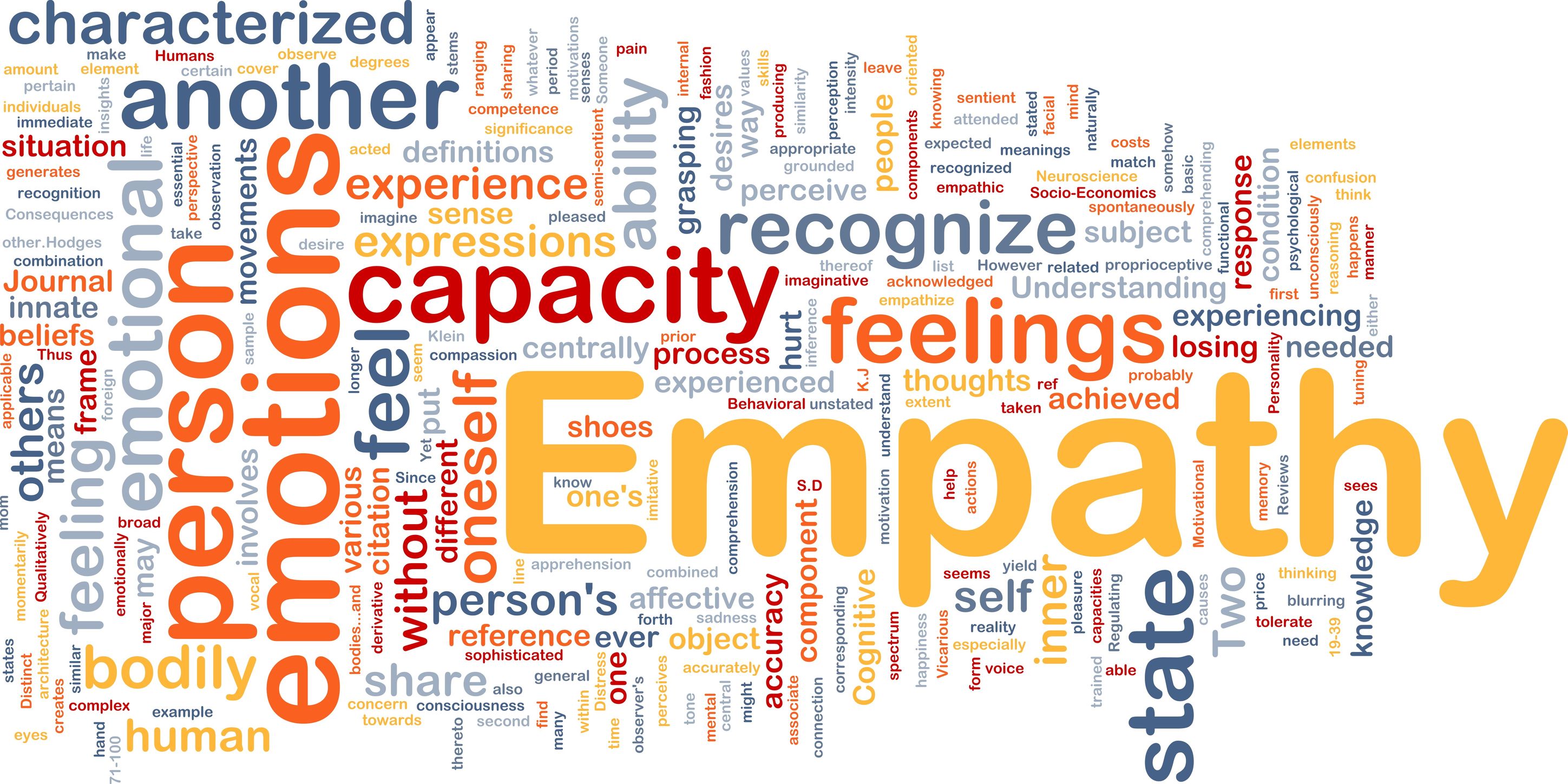
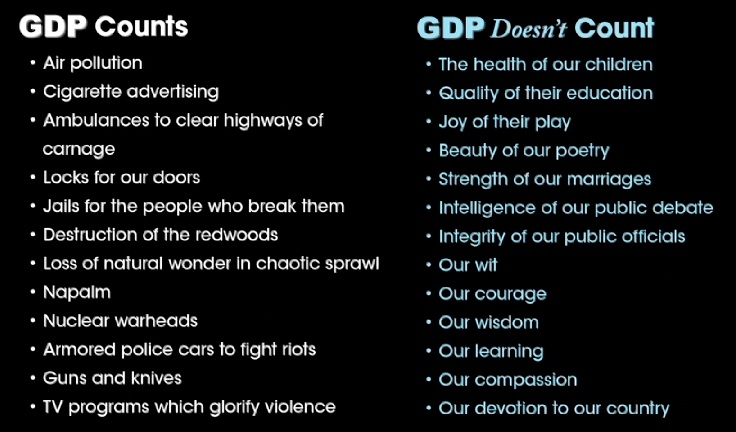
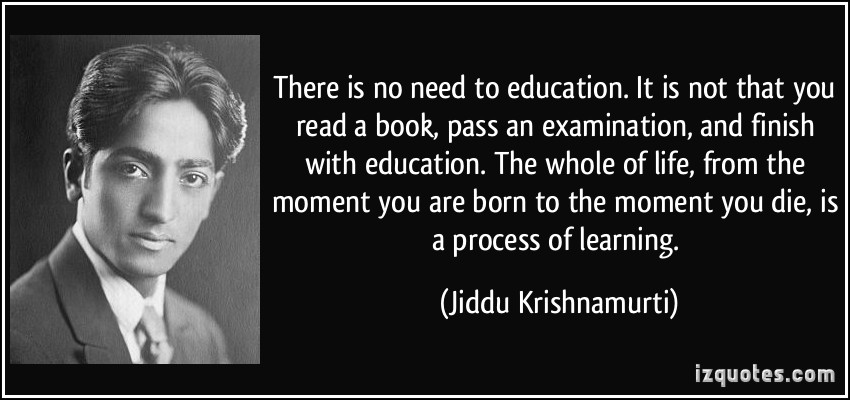
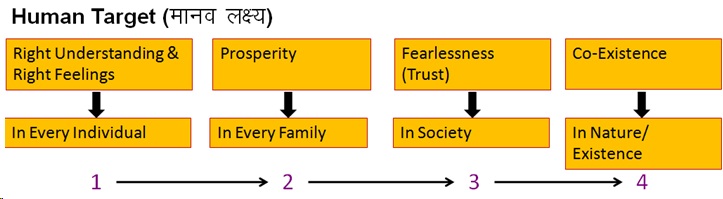
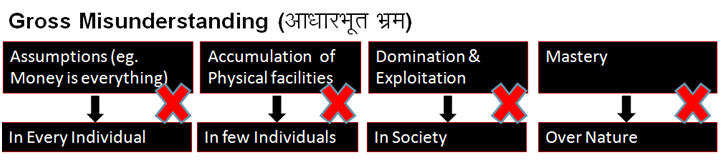


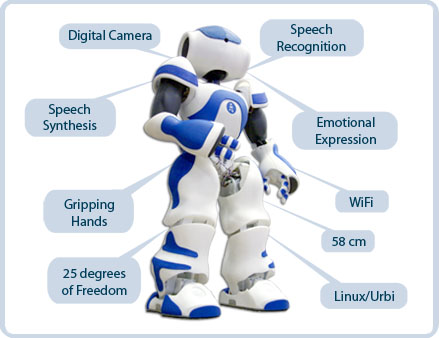
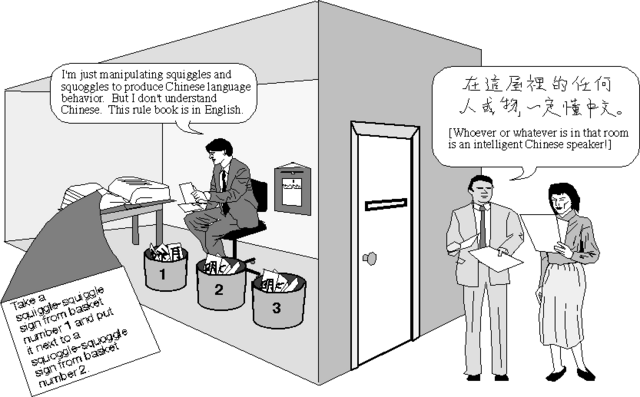
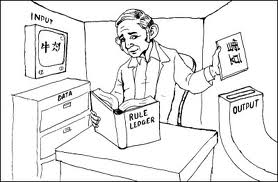
 The Intuitive Physicist