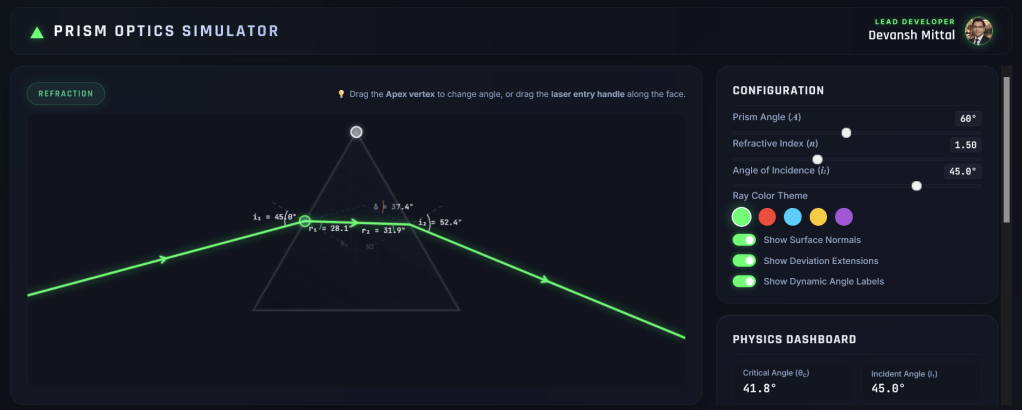
Prism Ray Diagram Simulator
Explore the fascinating journey of light through a prism with this interactive simulation. Adjust the prism angle, refractive index, and angle of incidence using intuitive sliders, and observe the complete ray path as light refracts inside the prism and emerges into air. Designed to strengthen conceptual understanding through visualization, this simulation helps students connect geometry with the laws of refraction, making prism optics intuitive rather than merely mathematical.
https://profdevansh.github.io/prism-ray-diagram
Progressive and Standing Waves Simulator
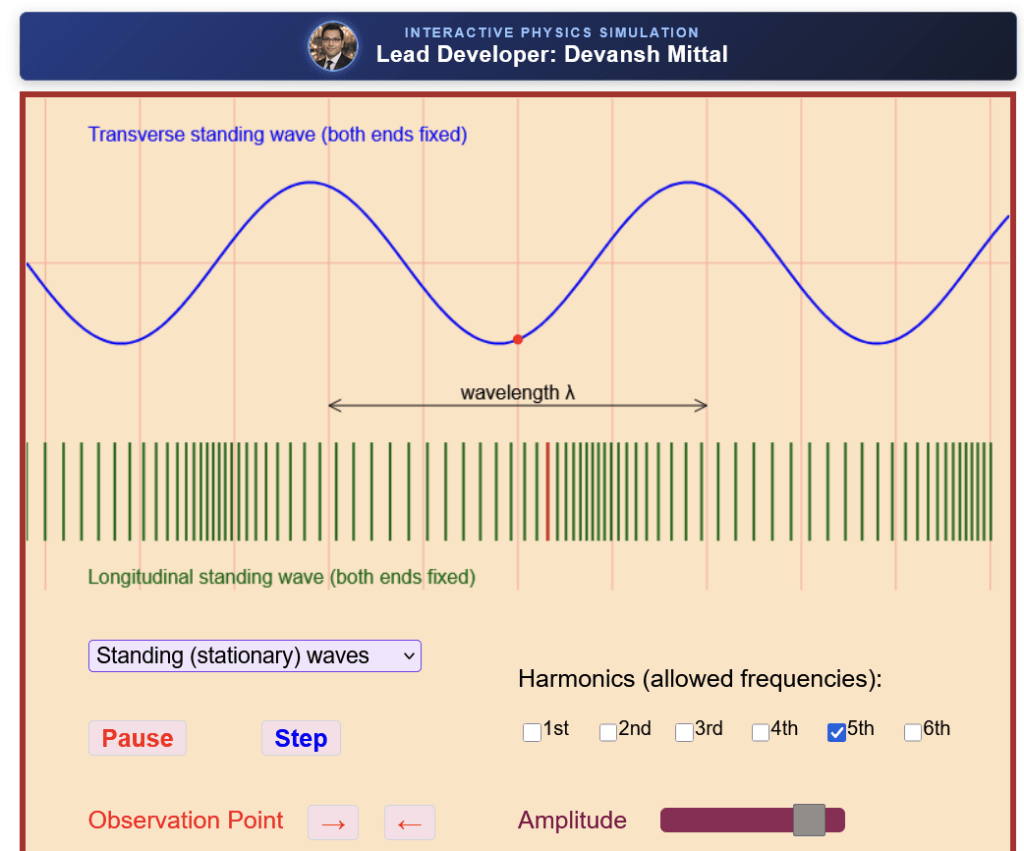
This app is an interactive physics simulator that visualizes and compares transverse and longitudinal waves in real time.
It allows users to switch between traveling waves (propagating left or right) and standing waves with fixed boundaries across the to harmonic modes. Users can adjust wave amplitude and frequency, pause or step through the animation frame-by-frame, and move an observation point with synchronized red markers tracking particle motion on both wave types. It also renders dynamic wavelength grids and dimension indicators to clearly demonstrate wave speed, node-antinode formation, and particle displacement.
https://profdevansh.github.io/waves
Standing Waves & Harmonic Resonance Simulator
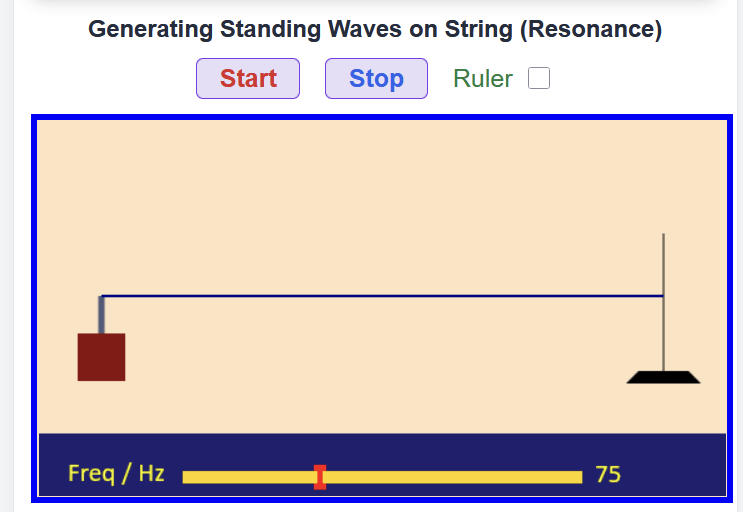
This interactive simulation models Melde’s classic vibrating string apparatus to explore forced, damped harmonic oscillations and the formation of standing waves. Users can dynamically vary the driving frequency from 20 Hz to 180 Hz, adjust the vibrating string length via a draggable boundary support stand, and observe sharp amplitude surges at resonant harmonic eigenmodes (). Equipped with an interactive metric ruler and movable cursor for precise nodal wavelength measurements, this tool provides an intuitive visual foundation for understanding stationary wave boundary conditions, nodes, antinodes, and harmonic frequency spectra.
https://profdevansh.github.io/standingwaves
Phase Difference: SHM, Rotating Phasors & Waveform Dynamics
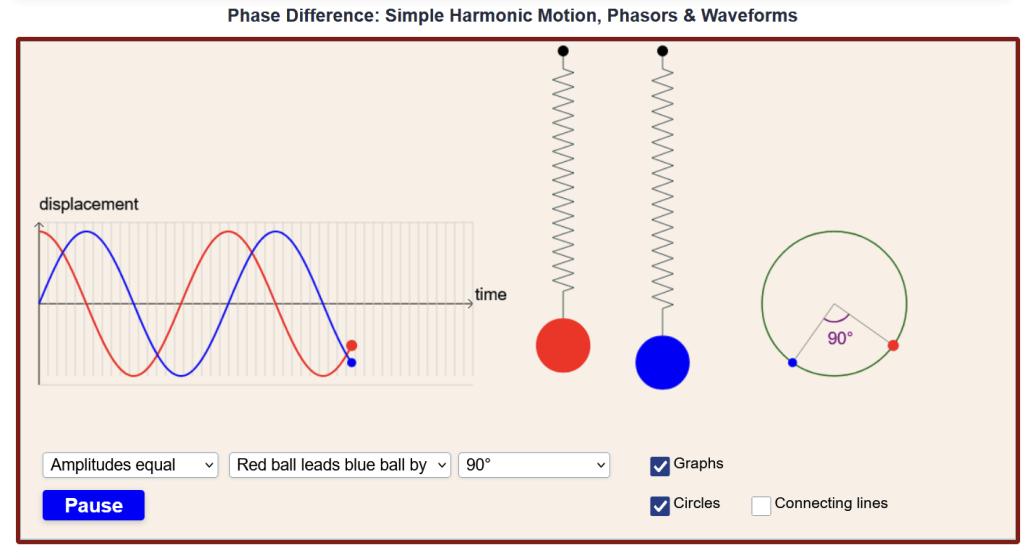
This simulation bridges the geometric and physical connections between one-dimensional Simple Harmonic Motion (SHM), two-dimensional rotating phasor circles, and continuous displacement-time sinusoidal graphs. By simulating two synchronized spring-mass oscillators, the tool enables learners to adjust phase angles from (in phase) to (antiphase), toggle leading/lagging relationships, and modify relative amplitudes. Optional orthogonal projection lines visually connect the circular phasor vectors directly to the physical oscillating bobs and the evolving wave crests, clarifying the concept of phase difference in oscillatory systems.
https://profdevansh.github.io/phasedifference
Acoustic Timbre & Fourier Harmonic Sound Synthesizer
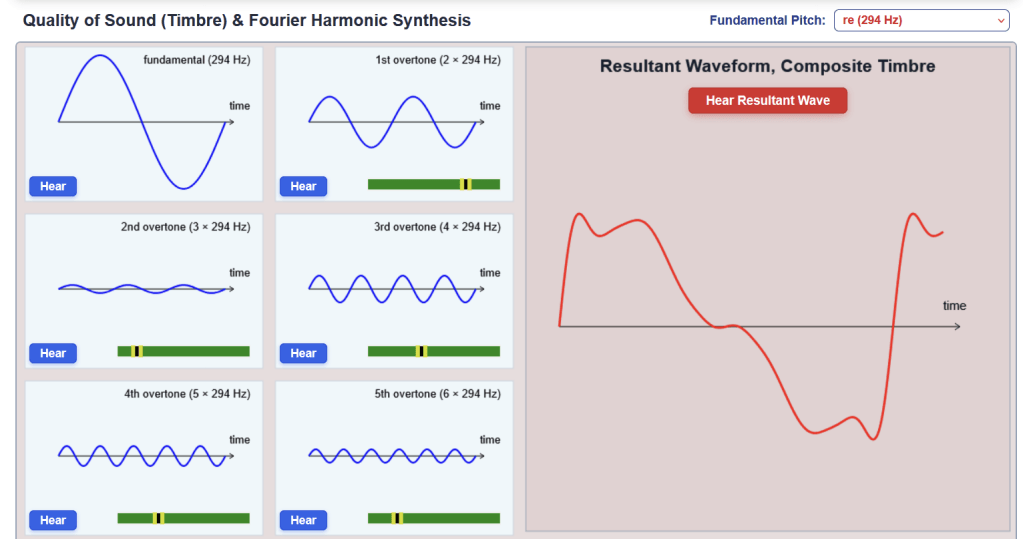
Demonstrating Fourier’s superposition principle in musical acoustics, this simulation illustrates how the unique tone color (timbre) of musical instruments arises from harmonic overtone balances. Users select a fundamental pitch across the standard Solfège scale and independently tune the relative amplitudes of ten harmonic overtones using real-time sliders. The app dynamically computes the resultant complex wave shape, updates the relative Fourier power spectrum bar chart, and leverages the Web Audio API to synthesize both isolated pure sine tones and composite multi-harmonic acoustic waves live in the browser.
https://profdevansh.github.io/qualityofsound
Acoustic Beats & Sound Wave Interference Lab
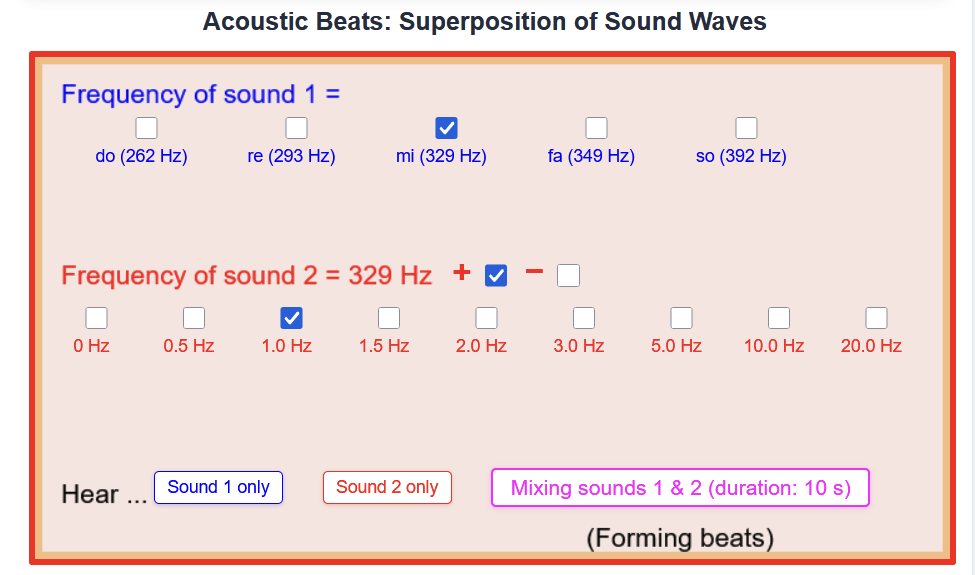
This interactive acoustic lab demonstrates the wave superposition phenomenon of beats produced when two sound waves of slightly different frequencies interfere collinear in time. Users can select a base musical pitch and dial in precise frequency offsets () with positive or negative shifts (). Integrated with real-time Web Audio API synthesis, the simulation lets users audition isolated pure tones and trigger a 10-second dual-tone mix, enabling them to audibly experience, time, and count the periodic waxing and waning of loudness governed by the beat frequency formula
https://profdevansh.github.io/beats
 The Intuitive Physicist