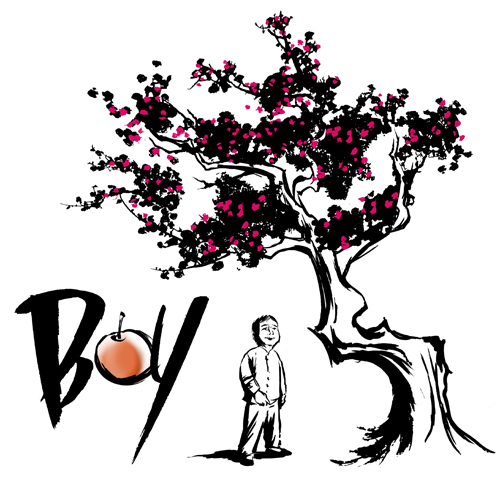
I have heard that there was once an ancient and majestic tree, with branches spreading out towards the sky. When it was in a flowering mood, butterflies of all shapes, colors and sizes danced around it. When it grew blossoms and bore fruit, birds from far lands came and sang in it. The branches, like outstretched hands, blessed all who came and sat in their shade. A small boy used to come and play under it, and the big tree developed an affection for the small boy.
Love between big and small is possible, if the big is not aware that it is big. The tree did not know it was big; only man has that kind of knowledge. The big always has the ego as its prime concern, but for love, nobody is big or small. Love embraces whomsoever comes near.
So the tree developed a love for this small boy who used to come to play near it. Its branches were high, but it bent and bowed them down so that he might pluck its flowers and pick its fruit. Love is ever ready to bow; the ego is never ready to bend. If you approach the ego, its branches will stretch upwards even more; it will stiffen so you cannot reach it.
The playful child came, and the tree bowed its branches. The tree was very pleased when the child plucked some flowers; its entire being was filled with the joy of love. Love is always happy when it can give something; the ego is always happy when it can take. The boy grew. Sometimes he slept on the tree’s lap, sometimes he ate its fruit, and sometimes he wore a crown of the tree’s flowers and acted like a jungle king. One becomes like a king when the flowers of love are there, but one becomes poor and miserable when the thorns of the ego are present. To see the boy wearing a crown of flowers and dancing about filled the tree with joy. It nodded in love; it sang in the breeze. The boy grew even more. He began to climb the tree to swing on its branches. The tree felt very happy when the boy rested on its branches. Love is happy when it gives comfort to someone; the ego is only happy when it gives discomfort.
With the passage of time the burden of other duties came to the boy. Ambition grew; he had exams to pass; he had friends to chat with and to wander about with, so he did not come often. But the tree waited anxiously for him to come. It called from its soul, ”Come. Come. I am waiting for you.” Love waits day and night. And the tree waited. The tree felt sad when the boy did not come. Love is sad when it cannot share; love is sad when it cannot give. Love is grateful when it can share. When it can surrender, totally, love is the happiest.
As he grew, the boy came less and less to the tree. The man who becomes big, whose ambitions grow, finds less and less time for love. The boy was now engrossed in worldly affairs.
One day, while he was passing by, the tree said to him, ”I wait for you but you do not come. I expect you daily.”
The boy said, ”What do you have? Why should I come to you? Have you any money? I am looking for money.” The ego is always motivated. Only if there is some purpose to be served will the ego come. But love is motiveless. Love is its own reward.
The startled tree said, ”You will come only if I give something?” That which withholds is not love. The ego amasses, but love gives unconditionally. ”We don’t have that sickness, and we are joyful,” the tree said. ”Flowers bloom on us. Many fruits grow on us. We give soothing shade. We dance in the breeze, and sing songs. Innocent birds hop on our branches and chirp even though we don’t have any money. The day we get involved with money, we will have to go to the temples like you weak men do, to learn how to obtain peace, to learn how to find love. No, we do not have any need for money.”
The boy said, ”Then why should I come to you? I will go where there is money. I need money.” The ego asks for money because it needs power.
The tree thought for a while and said, ”Don’t go anywhere else, my dear. Pick my fruit and sell it. You will get money that way.”
The boy brightened immediately. He climbed up and picked all the tree’s fruit; even the unripe ones were shaken down. The tree felt happy, even though some twigs and branches were broken, even though some of its leaves had fallen to the ground. Getting broken also makes love happy, but even after getting, the ego is not happy. The ego always desires more. The tree didn’t notice that the boy hadn’t even once looked back to thank him. It had had its thanks when the boy accepted the offer to pick and sell its fruit.
The boy did not come back for a long time. Now he had money and he was busy making more money from that money. He had forgotten all about the tree. Years passed. The tree was sad. It yearned for the boy’s return – like a mother whose breasts are filled with milk but whose son is lost. Her whole being craves for her son; she searches madly for her son so he can come to lighten her. Such was the inner cry of that tree. Its entire being was in agony.
After many years, now an adult, the boy came to the tree.
The tree said, ”Come, my boy. Come embrace me.”
The man said, ”Stop that sentimentality. That was a childhood thing. I am not a child any more.” The ego sees love as madness, as a childish fantasy.
But the tree invited him: ”Come, swing on my branches. Come dance. Come play with me.”
The man said, ”Stop all this useless talk! I need to build a house. Can you give me a house?”
The tree exclaimed: ”A house! I am without a house.” Only men live in houses. Nobody else lives in a house but man. And do you notice his condition after his confinement among four walls? The bigger his buildings, the smaller man becomes. ”We do not stay in houses, but you can cut and take away my branches – and then you may be able to build a house.”
Without wasting any time, the man brought an axe and severed all the branches of the tree. Now the tree was just a bare trunk. But love cares not for such things – even if its limbs are severed for the loved one. Love is giving; love is ever ready to give.
The man didn’t even bother to thank the tree. He built his house. And the days flew into years. The trunk waited and waited. It wanted to call for him, but it had neither branches nor leaves to give it strength. The wind blew by, but it couldn’t even manage to give the wind a message. And still its soul resounded with one prayer only: ”Come. Come, my dear. Come.” But nothing happened.
Time passed and the man had now become old. Once he was passing by and he came and stood by the tree.
The tree asked, ”What else can I do for you? You have come after a very, very long time.”
The old man said, ”What else can you do for me? I want to go to distant lands to earn more money. I need a boat, to travel.”
Cheerfully, the tree said, ”But that’s no problem, my love. Cut my trunk, and make a boat from it. I would be so very happy if I could help you go to faraway lands to earn money. But, please remember, I will always be awaiting your return.”
The man brought a saw, cut down the trunk, made a boat and sailed away.
Now the tree is a small stump. And it waits for its loved one to return. It waits and it waits and it waits. The man will never return; the ego only goes where there is something to gain and now the tree has nothing, absolutely nothing to offer. The ego does not go where there is nothing to gain. The ego is an eternal beggar, in a continuous state of demand, and love is charity. Love is a king, an emperor! Is there any greater king than love?
I was resting near that stump one night. It whispered to me, ”That friend of mine has not come back yet. I am very worried in case he might have drowned, or in case he might be lost. He may be lost in one of those faraway countries. He might not even be alive any more. How I wish for news of him! As I near the end of my life, I would be satisfied with some news of him at least. Then I could die happily. But he would not come even if I could call him. I have nothing left to give and he only understands the language of taking.”
The ego only understands the language of taking; the language of giving is love.
I cannot say anything more than that. Moreover, there is nothing more to be said than this: if life can become like that tree, spreading its branches far and wide so that one and all can take shelter in its shade, then we will understand what love is. There are no scriptures, no charts, no dictionaries for love. There is no set of principles for love.


A very good story to describe the difference between “unconditional love” and “ego”. Only those people can give love of such kind who are free from all conditionings and who have conquered their ego. I think they are the people for whom there is no difference between them and others…so they have experienced the ultimate reality of the existence.
Thanks Didi 🙂
Read the story. There are different ways of reading this story. I see this as a story of a boy who did not have a sense of gratitude.
Took note of your punch line – “The ego only understands the language of taking; the language of giving is love.” This may not be true always. You will find many who give because of their ego.
Another observation – Tree did not demonstrate ‘true love’. Tree demonstrated its ‘राग’ with a specific individual. He was stuck with it. If it knew true love, it would have relished love with others and would not have ‘longed’ for attention from a specific individual.
This is why I say that it is a story of an ungrateful boy/man. He did not have a sense of gratitude for the tree.
Dear Sir,
First I must express my gratitude that you read and commented on my article. Thanks a lot for it.
Following are some of my reflections on your comment.
1. “I see this as a story of a boy who did not have a sense of gratitude.”
> I agree with you on this point totally. Boy lacks the sense of gratitude.
2. “You will find many who give because of their ego.”
> In such cases the giving will not be unconditional and it will not last for long. It will be giving to ensure something out it, it may be physical or non-physical but some sense of achievement/expectation will be there. Here in case of Tree the giving is Unconditional. Tree just wishes the good of the boy, wishes the boy to enjoy, be happy and to be in the right direction in life. Even when the Tree knows that the boy is not going to return back again and the boy has used him completely up, the Tree is wishing good for the boy. In case of Ego that would not happen.
3. “Another observation – Tree did not demonstrate ‘true love’. Tree demonstrated its ‘राग’ with a specific individual. He was stuck with it. If it knew true love, it would have relished love with others and would not have ‘longed’ for attention from a specific individual.”
> The story can also be interpreted the way you did it. I wish to add a few more things to it in order to show that it could also be seen as “True Love”.
There is an eternal concern in tree for the goodwill of the boy. Having a concern and getting stuck are two different things. Though from the story it may also be felt as if the Tree is stuck with the boy for his attention, but had that been the case then the tree would like to restore its beauty to please the boy but that is not happening.
Tree just wishes the good of the boy, wishes the boy to enjoy, be happy and be in right direction in his life. In spite of the fact that Tree knows that boy is totally ego-centric and wants nothing more than his profit, still Tree is ready to offer. Ego would find it difficult to offer in a long run. Ego offers till the time their is gain or there is expectation of gain. Love offers without the feeling of gain. Here Tree is offering just with the feeling of goodwill of the boy. Even after the Tree knows that the boy is not going to come back again after he has crossed the seas and the boy has used him (Tree) completely up, Tree is wishing goodwill of the boy. Ego in such case will feel disappointed and will say that such a bad and ungrateful the boy is, he did not even thank me for what I did for him!
In the story it may also seem that the Tree is in pain, but this pain is not out of disappointment due to ungratefulness of the boy but due to the concern for the boy. A Loving person may also be in pain, in fact in severe pains when he sees that the people around are going into wrong directions. This pain is out of concern and not out of disappointment.
4. Unfortunately in the story there are only two characters i.e. the Tree and the Boy, so there is no place in the story where it can be shown that Tree had similar concerns for others as well. But there are certain other things which I tried to point out in above points which show the possibility of Love.
With Utmost Regards,
Devansh
Good story….
Nice, this was written on my birthday! 🙂